
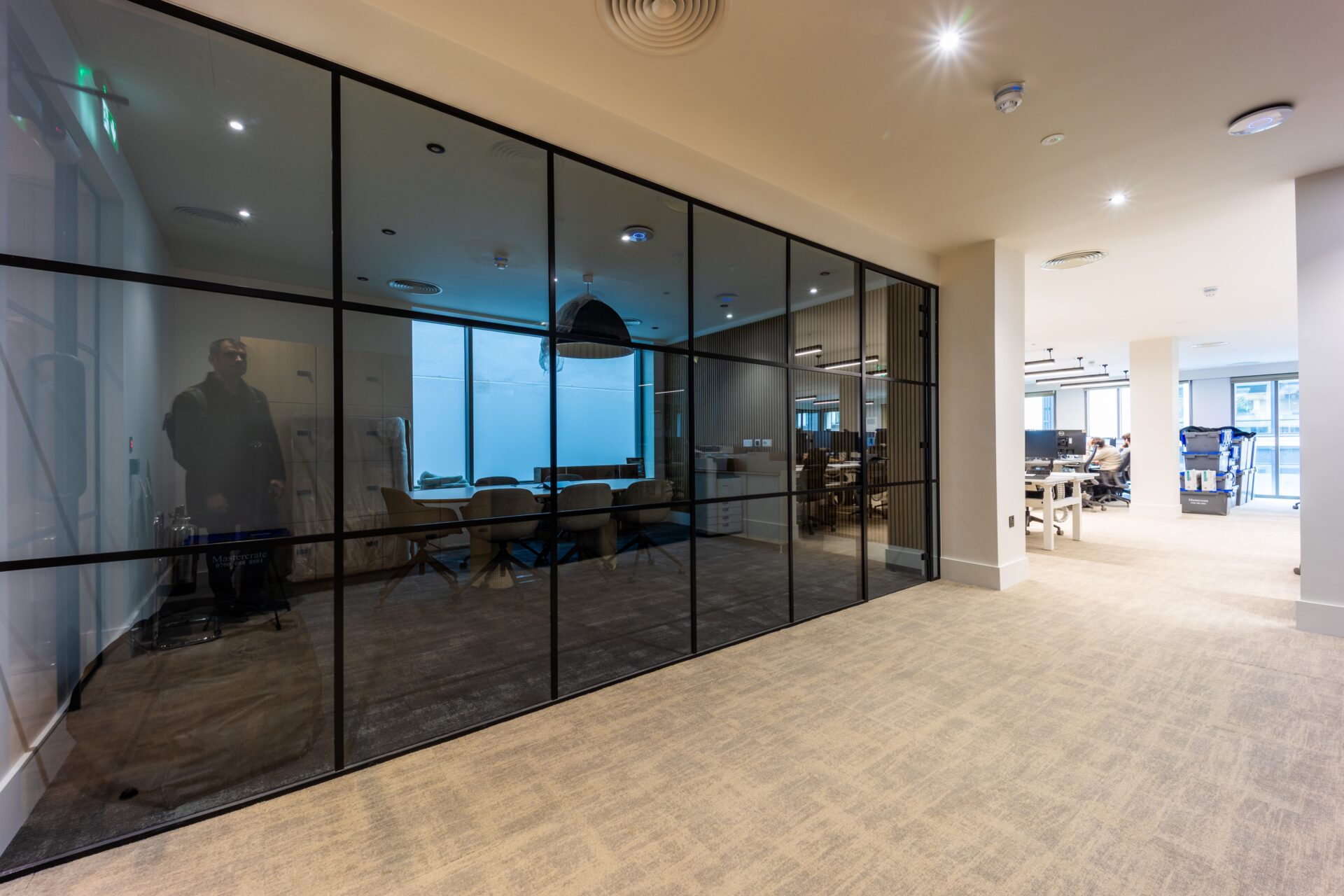
Laminated glass is widely used in commercial offices because of its strength, safety performance, and ability to control sound. Whether you’re planning new office partitions, meeting rooms, or front-of-house glazing, understanding how laminated glass works helps you choose the right system for your workspace.
How is Laminated Glass Made
Laminated glass is created by bonding two or more layers of glass with an interlayer, usually PVB (polyvinyl butyral) or EVA. The layers are sealed together using heat and pressure, forming a single, durable panel.
How laminated glass works
- The interlayer holds the glass together even if it breaks.
- Broken pieces stay in place instead of shattering.
- The panel continues to act as a barrier after impact.
This makes it a reliable option for commercial environments where safety and durability are priorities.
Key Benefits of Laminated Glass for Commercial Buildings
1. Enhanced safety
- Shattered glass stays bonded to the interlayer.
- Reduces the risk of injury in busy or public areas.
2. Improved security
- Difficult to break through compared to standard glass.
- Suitable for reception areas, storefronts, and secure rooms.
3. Acoustic performance
- Laminated glass helps reduce noise transfer, ideal for meeting rooms, private offices, and acoustic glass partitions.
Related Read: Acoustic Glass partitions
4. UV protection
- The interlayer blocks up to 99% of UV rays, helping protect furniture, artwork, and flooring.
5. Versatility in commercial design
Available in multiple finishes, including:
- Clear
- Tinted
- Frosted / obscure
- Acoustic laminated
- Security laminated
Related Read: Obscure Glass and Frosted Glass
Common Applications of Laminated Glass in Offices
1. Office partitions: Ideal for internal glazing where safety and acoustic control are required.
2. Meeting rooms: Provides privacy and sound reduction while still allowing natural light.
3. Reception and front elevations: Adds security without compromising visibility.
4. Balustrades and barriers: Used for staircases, mezzanines, and upper-floor safety screens.
5. Doors and screens: Suitable for high-traffic office areas because of its safety performance.
Related Read: Office Partition Ideas
Laminated Glass vs Other Glass Types
1. Laminated Glass vs. Toughened Glass
- Toughened glass breaks into small pieces; laminated stays bonded.
- Laminated offers better sound insulation.
2. Laminated Glass vs. Acoustic Glass
- Acoustic glass is a specialised laminated glass with enhanced soundproof interlayers.
3. Laminated Glass vs. Frosted or Etched Glass
- Frosted or etched affects appearance.
- Laminated affects performance.
Factors That Affect Laminated Glass Specification
1. Glass thickness
Thicker constructions (example 10.8mm, 12.8mm, 16.8mm) provide higher safety and acoustic performance.
2. Inter layer type
- PVB (standard laminated)
- Acoustic PVB
- SGP (strong interlayer used for high-impact requirements)
- Fire-rated requirements
Some fire-rated systems can incorporate laminated constructions.
3. Frame compatibility
Ensure the partition system supports laminated glazing, especially important for slimline or frameless glass partitions.

Final Thoughts
Laminated glass offers a balance of safety, security, and acoustic performance, making it one of the most reliable glazing choices for commercial settings. Whether you’re designing private offices, reception screens, or high-traffic zones, laminated glass provides the durability and performance modern workplaces require.
FAQs
Yes. Laminated glass can incorporate tinted layers or coloured interlayers without affecting its safety properties.
Standard laminated glass remains clear. Some interlayers may slightly reduce light transmission, but the difference is minimal.
Yes, if the system has been tested for laminated glazing. Some slim systems require specific thicknesses.
Yes. It offers better sound insulation than standard glass, especially when using acoustic interlayers.
With proper installation, it can last decades. The interlayer is protected between glass sheets, making it stable and long-lasting.
Yes, due to the manufacturing process. However, the additional safety and acoustic benefits justify the investment for commercial environments.