
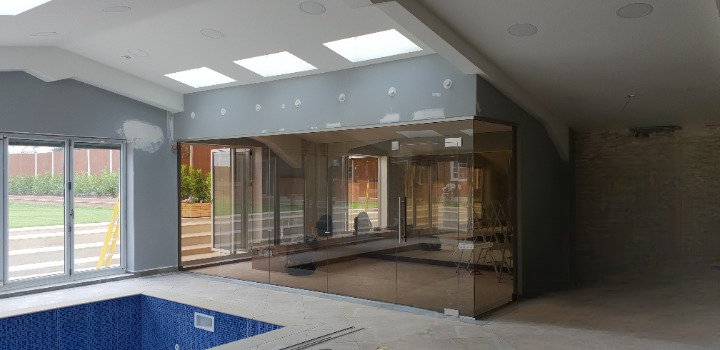
Glass partitions are widely used in wet environments across commercial spaces such as swimming pools, spas, gyms, wellness centers, and leisure facilities. When specified correctly, they offer durability, safety, and visual openness, but wet areas demand more than standard glass solutions.
This guide explains where glass partitions work best in wet areas, what technical factors matter, and how to specify the right system for long-term performance.
Where Glass Partitions are Used in Wet Areas
In commercial settings, wet areas require partitions that can handle constant moisture, temperature changes, and heavy footfall.
Common applications include:
- Swimming pool enclosures and viewing panels.
- Spa and wellness zones.
- Sauna and steam room divisions.
- Gym shower and changing facilities.
- Leisure centre circulation areas.
- Hotel pool and health club zones.
In these environments, partitions must deliver safety, water resistance, and compliance, without compromising visibility or design intent.
View Details: Glass Partition for Wet Areas
Why Glass is Suitable for Wet Environments
Glass performs well in wet areas when paired with the right specification and detailing.
Key reasons commercial projects use glass partitions:
- Moisture resistance: Glass does not absorb water or warp.
- Hygienic surface: Easy to clean and resistant to mould buildup.
- Visual supervision: Maintains sightlines around pools and leisure zones.
- Durability: Designed to withstand daily use in high-traffic areas.
- Design continuity: Supports open, modern interiors.
However, suitability depends heavily on glass type, thickness, fixings, and finishes.
Best Glass Types for Wet Area Partitions
Not all glasses perform equally in wet environments. These are the most suitable options for commercial projects
1. Toughened (Tempered) Glass
- High impact resistance.
- Breaks into small, blunt fragments if damaged.
- Suitable for pool surrounds, gyms, and circulation areas.
2. Laminated Glass
- Holds together when broken.
- Added safety in public or high-risk zones.
- Often used where containment or overhead glazing is required.
3. Frosted or Acid-Etched Glass
- Provides privacy while allowing light through.
- Common in changing areas and spa zones.
- Can be specified for consistent opacity.
Read More: Frosted vs. Acid-Etched Glass
For environments with constant humidity, glass selection should always align with safety standards and usage intensity.
Key Design & Technical Considerations for Wet Areas
Wet area glass partitions require more than visual planning. These technical details directly affect performance and lifespan.
1. Glass Thickness & Structural Stability
- Thicker glass improves strength and rigidity.
- Required thickness depends on span, height, and fixing method.
- Pool environments often require enhanced structural calculations.
2. Water Drainage & Detailing
- Base channels must allow proper drainage.
- Standing water around fixings should be avoided.
- Correct floor tolerances reduce long-term wear.
3. Fixings & Hardware
- Stainless steel or corrosion-resistant materials are essential.
- Fixings must withstand humidity and cleaning chemicals.
- Minimal hardware reduces maintenance issues.
4. Slip Resistance & Safety
- Adjacent flooring should meet slip-resistance standards.
- Clear visibility helps reduce accidents around wet surfaces.
Privacy vs Visibility in Wet Area Glass Partitions
Balancing privacy and supervision is a common challenge in commercial wet environments.
Typical approaches include:
- Clear glass for pool surrounds and viewing panels.
- Frosted or patterned glass for changing and shower areas.
- Partial frosting to control sightlines without full opacity.
This approach allows facilities to meet safety, comfort, and operational needs without over-partitioning spaces.
Compliance & Safety Requirements
Glass partitions in wet areas must meet strict commercial safety expectations. Important considerations:
- Compliance with building regulations and safety glazing standards.
- Use of safety glass in all public-facing installations.
- Edge polishing and safe finishing.
- Structural certification where required.
Early coordination with experienced glass partition specialists helps avoid costly revisions later in the project.
Maintenance & Long-Term Performance
Wet areas place constant stress on materials, making maintenance planning essential.
Best practices include:
- Regular cleaning with non-abrasive products.
- Preventing mineral buildup from water exposure.
- Inspecting fixings and seals periodically.
- Avoiding harsh chemicals that may damage finishes.
Correct specification reduces ongoing maintenance demands and extends service life.
Final Thoughts
Glass partitions can perform exceptionally well in wet commercial environments when specified correctly. The right combination of glass type, fixings, detailing, and compliance ensures long-term safety and visual clarity.
Rather than treating wet areas as standard installations, successful projects consider usage conditions, maintenance demands, and regulatory requirements from the outset.
Careful planning leads to safer spaces, better longevity, and fewer operational issues over time.
FAQs
Yes, provided safety glass is used and fixings are designed to handle moisture, cleaning chemicals, and foot traffic.
Not always. Laminated glass is typically used where containment or enhanced safety is required, while toughened glass is sufficient in many pool and gym applications.
Routine cleaning with mild, non-abrasive products is recommended to prevent surface damage and mineral buildup.
With correct specification and maintenance, commercial glass partitions can perform reliably for many years, even in high-humidity environments.
Yes, options such as partial frosting or patterned finishes can be specified at the design stage to balance visibility and privacy.