
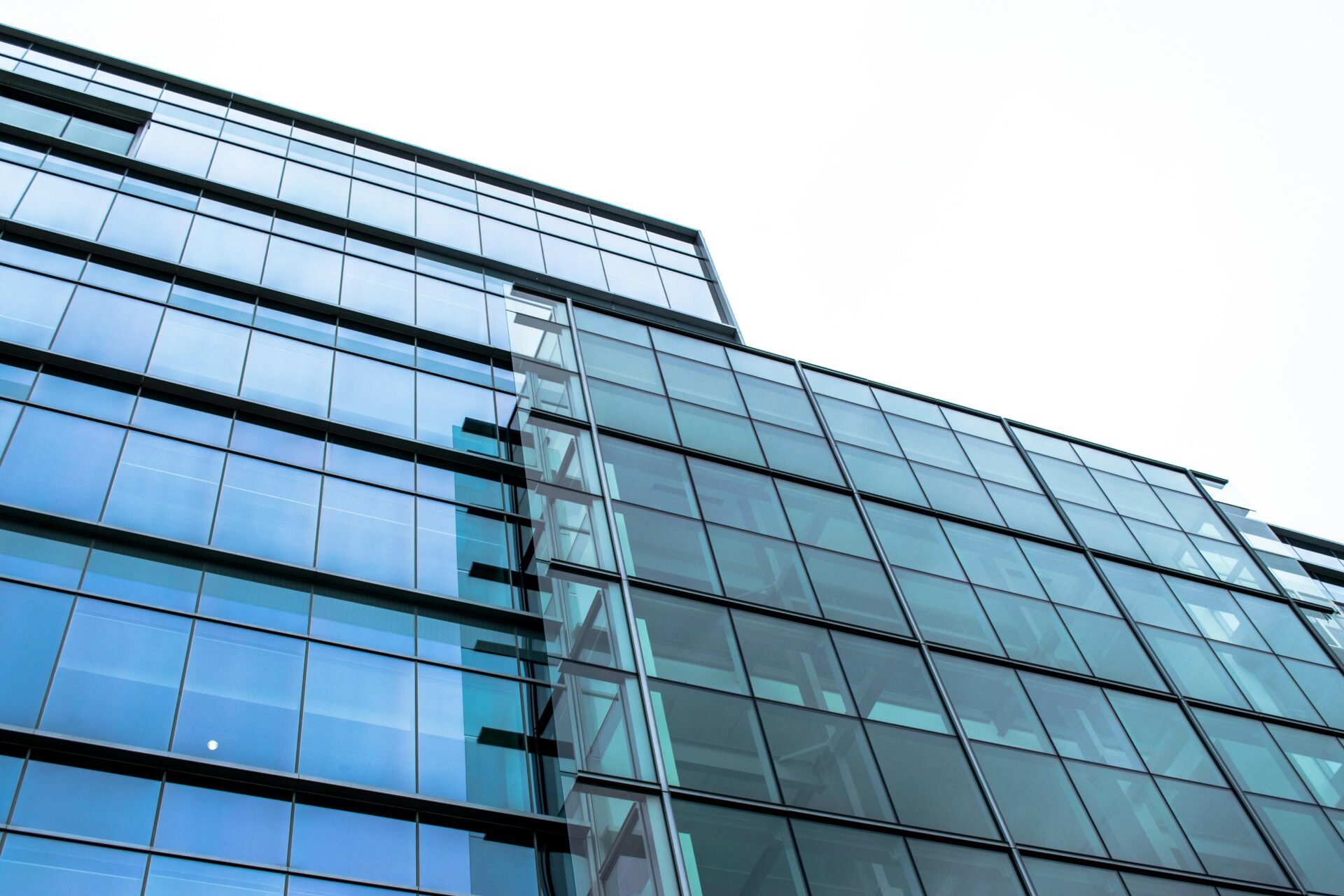
Glass curtain walling is widely used in modern commercial architecture to create large glazed facades that maximise natural light while protecting buildings from external weather conditions. These systems are commonly installed on office buildings, commercial complexes, retail centres, and hospitality properties where visibility, energy performance, and modern aesthetics are important.
Unlike structural walls, curtain walling is a non-load-bearing exterior cladding system. It attaches to the building structure and supports large panels of glass within aluminium framing. This allows designers to create visually striking façades while maintaining structural safety and energy efficiency.
In commercial construction and refurbishment projects, glass curtain walling helps create open, well-lit spaces while improving the overall appearance and performance of a building envelope.
What Is Glass Curtain Walling?
Glass curtain walling refers to a lightweight external glazing system fixed to a building’s structural frame. Instead of supporting structural loads, the curtain wall acts as a protective outer layer that keeps weather out while allowing daylight inside.
Typical components include:
- Aluminium framing systems.
- Toughened or laminated safety glass panels.
- Structural anchors connecting the façade to the building.
- Weatherproof seals and gaskets.
- Thermal insulation elements.
The system transfers wind loads and environmental forces back to the main building structure while maintaining a continuous glazed exterior.
Read More: What is Curtain Walling
Why Commercial Buildings Use Glass Curtain Walling
Curtain walling is widely used because it delivers both performance and design advantages.
1. Increased Natural Light: Large glazed façades allow natural daylight to penetrate deep into interior spaces, reducing reliance on artificial lighting.
2. Modern Building Appearance: Glass curtain wall systems create sleek and contemporary building exteriors commonly seen in office developments, hotels, and retail spaces.
3. Weather Protection: Properly designed curtain walling systems prevent water infiltration while resisting wind pressure and environmental exposure.
4. Energy Efficiency: Modern curtain wall glazing can include insulated glass units that improve thermal performance and reduce heating and cooling demands.
5. Design Flexibility: Architects can create curved façades, full-height glazing, or multi-storey glazed elevations using curtain wall systems.
Where Glass Curtain Walling Is Commonly Used
Glass curtain walling is suitable for many types of commercial buildings, including:
- Office buildings and corporate headquarters.
- Retail centres and shopping malls.
- Hotels and hospitality properties.
- Commercial refurbishment projects.
- Educational institutions.
- Healthcare facilities.
- Leisure complexes and sports venues.
In many commercial fit-out projects, curtain wall glazing also works alongside internal systems such as glass partitions or office glazing solutions.
View More: Office Glass Partitions
Types of Glass Curtain Walling Systems
Different curtain wall systems are used depending on the design requirements and building structure.
1. Stick Curtain Wall System: This is one of the most common systems used in commercial construction.
Features include:
- Installed piece by piece on site.
- Vertical mullions and horizontal transoms assembled during installation.
- Suitable for medium-scale projects.
Benefits:
- Flexible installation.
- Lower transportation costs.
- Adaptable to design changes.
2. Unitised Curtain Wall System: Unitised systems are manufactured in large prefabricated sections.
Features include:
- Panels assembled in factory conditions.
- Installed as complete units on site.
- Faster installation for large projects.
Benefits:
- Reduced installation time.
- Higher quality control.
- Ideal for high-rise buildings.
3. Structural Glazing Curtain Walls: Structural glazing uses minimal visible framing to create seamless glass façades.
Features include:
- Glass bonded to structural frames.
- Hidden support systems.
- Continuous glass appearance.
Benefits:
- Premium architectural appearance.
- Maximum transparency.
- Common in flagship commercial buildings.
What are the Different Glass Options Used in Curtain Walling
Different glass types can be used depending on safety, energy performance, and acoustic requirements.
1. Toughened Glass
- High strength.
- Breaks into small fragments if damaged.
- Suitable for large glazed panels.
2. Laminated Glass
- Multiple layers bonded together.
- Improves safety and security.
- Reduces noise transmission.
Read More: What is Laminated Glass
3. Double or Triple Glazing
- Insulated glazing units.
- Improves thermal performance.
- Reduces heat loss.
Read More: Double Glazed Glass Partition
Key Design Considerations for Curtain Wall Systems
Successful curtain wall installations depend on careful planning and technical coordination. Important considerations include:
1. Structural Load Management: Curtain wall systems must transfer wind loads safely to the building structure.
2. Thermal Performance: Energy regulations require glazing systems that limit heat transfer.
3. Water Drainage: Curtain wall assemblies must include drainage paths to prevent water accumulation.
4. Acoustic Performance: In busy urban locations, laminated glass can reduce external noise entering the building.
5. Maintenance Access: Designs should allow safe cleaning and maintenance of exterior glass panels.
Curtain Walling vs Window Wall Systems
| Feature | Curtain Wall | Window Wall |
| Structural attachment | Attached to building frame | Installed between floor slabs |
| Installation | Often multi-storey systems | Installed floor by floor |
| Design flexibility | High flexibility | More limited |
| Typical use | Commercial buildings | Residential or mixed-use |
Maintenance and Long-Term Performance
Curtain wall systems are designed for durability, but regular inspection helps maintain performance. Recommended maintenance practices include:
- Routine glass cleaning.
- Checking seals and gaskets.
- Inspecting drainage systems.
- Reviewing structural fixings periodically.
Preventative maintenance extends the life of the system and maintains the building’s appearance.
Final Thoughts
Glass curtain walling plays a major role in modern commercial architecture. It enables buildings to maximise daylight, improve energy performance, and achieve distinctive exterior designs.
For commercial developers, architects, and property owners, selecting the correct curtain wall system involves balancing performance, aesthetics, safety, and long-term maintenance.
When planned correctly, curtain wall glazing can significantly enhance both the appearance and functionality of a commercial building.
FAQs
Glass curtain walling provides a weather-resistant external façade while allowing natural light into a building without carrying structural loads.
Yes. Many commercial refurbishments replace older façades with modern curtain wall systems to improve appearance and energy efficiency.
Installation timelines depend on building size, system type, and site conditions, but unitised systems often reduce installation time significantly.
Yes. Insulated glazing units and modern framing systems help reduce heat transfer and improve energy performance.
Curtain wall systems use safety glass such as toughened or laminated glass designed to meet commercial building regulations.