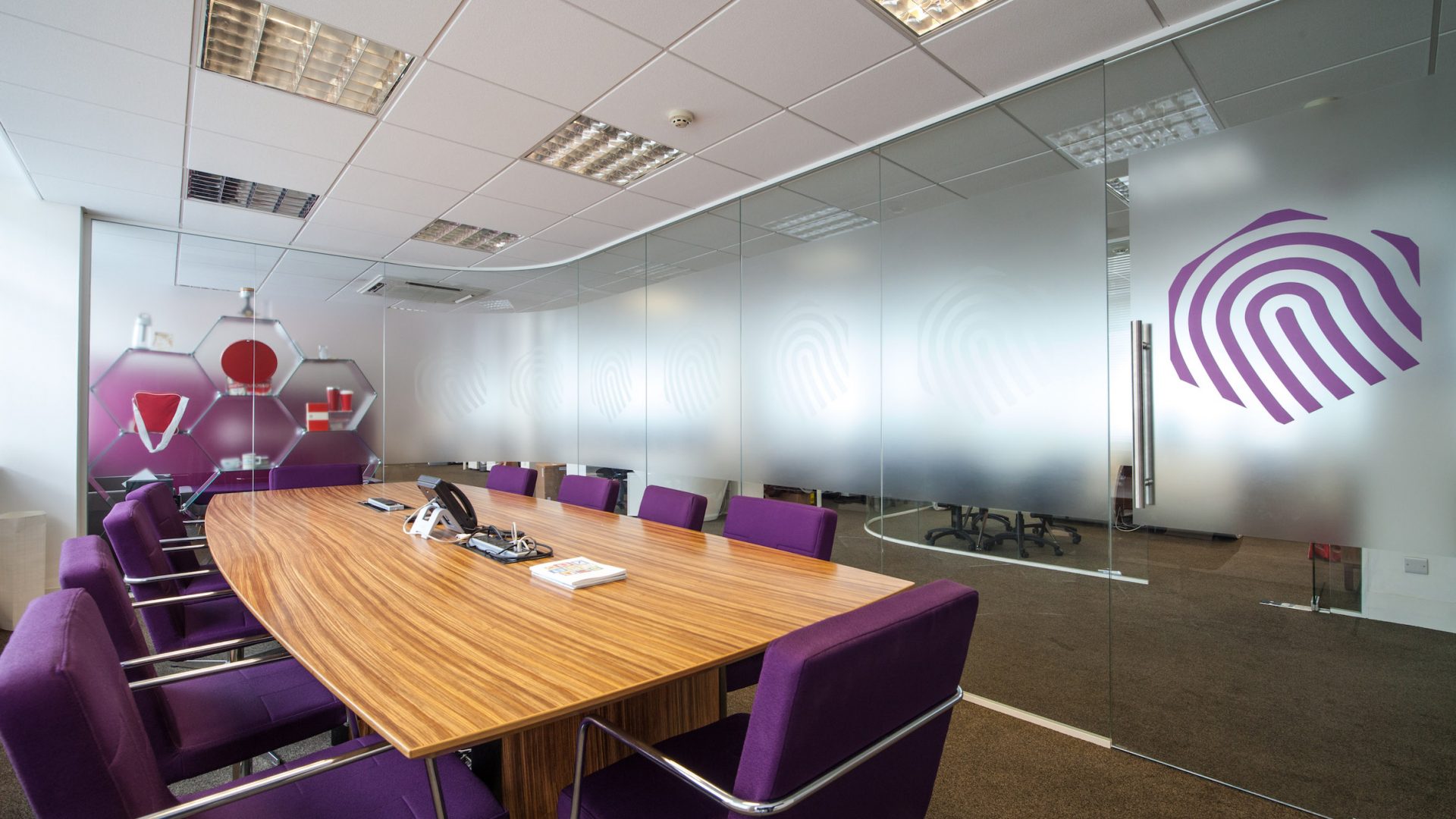
Privacy, light control, and aesthetics all depend on the glass finish you choose for your office partitions. Acid-etched and frosted glass are two of the most popular choices for workplaces, both offer translucent privacy without blocking natural light.
This blog breaks down the differences clearly so you can choose the right option for meeting rooms, offices, and collaborative spaces.
What is Acid-Etched Glass?
Acid-etched glass is created by applying a chemical etching treatment to one side of the glass. This permanently alters the surface, giving it a consistent, smooth, matte finish.
Key characteristics:
- Uniform appearance with a soft, satin-like texture.
- Permanent finish that cannot peel or fade.
- Diffuses light while maintaining brightness.
- More resistant to fingerprints compared to frosted film.
- Ideal for long-term, high-use commercial settings.
What is Frosted Glass?
Frosted glass is created either by sandblasting the surface or applying a frosted film. Both methods produce an opaque, privacy-enhancing finish, but the texture and durability vary.
Key characteristics:
- Higher opacity than acid-etched glass.
- Provides stronger visual privacy.
- Frosted film is replaceable, making it suitable for rebranding.
- Sandblasted glass feels slightly textured.
- Ideal for meeting rooms, HR offices, or confidential areas.
Read More: What Is Frosted Glass?
Acid-Etched vs. Frosted Glass – Key Differences
| Aspect | Acid-Etched Glass | Frosted Glass |
| Appearance | Smooth, premium matte finish | More opaque, textured or film-based |
| Privacy Level | Medium privacy | Medium to high privacy |
| Durability | Permanent | Film is replaceable; sandblast is permanent |
| Maintenance | Easier, fewer fingerprints | Film needs careful cleaning |
| Cost | Slightly higher for etching | Film is more cost-effective |
| Best For | High-end offices, reception, meeting fronts | HR rooms, confidential spaces, branded graphics |
Which Option is Better for Workspaces?
Choose acid-etched glass if you need:
- A consistent, premium finish.
- Easy cleaning and minimal fingerprint visibility.
- Long-term installations.
- Soft privacy without losing brightness.
Choose frosted glass if you need:
- Stronger visual privacy.
- Custom graphics, logos, or film designs.
- Flexibility for layout or brand changes.
- Budget-friendly solutions.
Commercial Use Cases
Where acid-etched glass works best:
- Boardrooms
- Executive offices
- Front-of-house partitions
- Collaborative zones needing subtle privacy
Where frosted glass works best:
- HR spaces
- Multi-purpose rooms
- Training rooms
- High-privacy meeting rooms
Practical Factors to Consider Before Choosing
1. Privacy requirements
- Frosted: Highest opacity
- Acid-etched: Moderate privacy with better light diffusion
2. Maintenance level
- Acid-etched: Hides smudges well
- Frosted film: Requires gentler cleaning
3. Long-term vs. flexible use
- Acid-etched: Permanent solution
- Frosted film: Changeable solution
4. Budget & installation
- Frosted glass film: More cost-effective
- Acid-etched: More durability over time
Final Thoughts
Acid-etched and frosted glass both enhance privacy and light flow, but they serve different needs. Acid-etched suits long-term, premium office environments, while frosted glass is ideal for flexible branding and higher privacy levels. Understanding how each performs helps you make an informed choice for meeting rooms, private offices, and open-plan layouts.
FAQs
Yes. Both finishes can be applied to acoustic glass partitions without affecting sound performance.
No. Finishes are applied to surfaces and do not interfere with certified fire-rated systems.
Yes. Frosted film is ideal for privacy bands, gradient fades, or patterned designs.
Both can be used, but acid-etched tends to show fewer marks from frequent handling.
Acid-etched glass performs better in busy zones because of its durable, smudge-resistant finish.